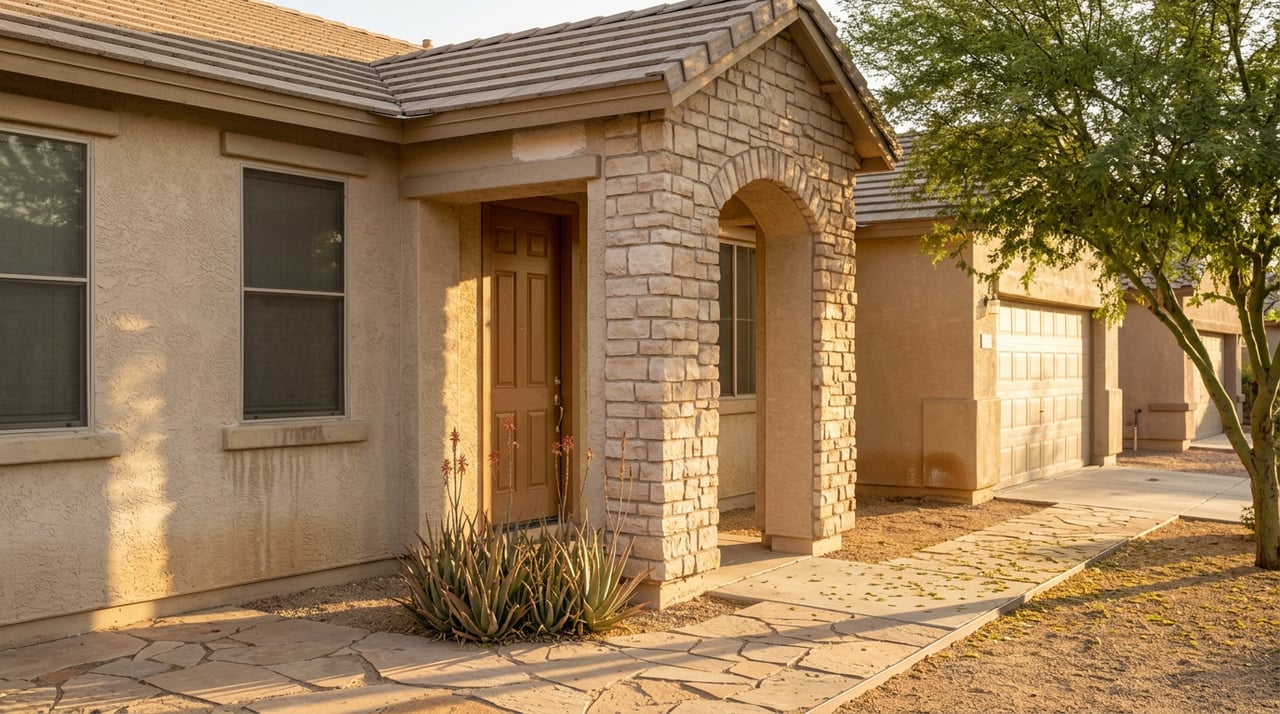
A seller near a new Century Communities closing in Skye Canyon might check the public record before setting a resale price. For example, if a new build sold for $520,000 three weeks ago and had similar square footage, a similar lot, and the same school zone, a seller might price a resale at $515,000, believing that to be conservative.
A comparison with a new build may be incomplete if the sale included a rate buydown, a closing-cost credit, and a design-center allowance. The recorded price is real, but it does not by itself show the value of those incentives in cash-equivalent terms.
This is the story playing out across Centennial Hills right now, particularly in the Skye Canyon and Providence pockets where most of the neighborhood's active new construction sits. Builders here are offering incentives, so the headline sale price on a new-construction closing may not show the full value of those incentives.
How Builder Incentives Affect Recorded Prices
Walk into a sales office in Skye Canyon this fall and the flyer on the counter usually shows one number: a rate, a credit, or a price. What actually changes hands is a layered deal built from three separate levers, each negotiated separately and each affecting the final price differently:
- Rate buydowns, temporary or permanent, that lower the buyer's monthly payment without touching the recorded purchase price
- Closing-cost credits, typically running $10,000 to $40,000 depending on the builder and community, usually routed through the builder's preferred lender
- Design-center allowances, running $15,000 to $50,000, most common on homes that are already finished and sitting on the builder's books
None of these show up as a discount on the recorded sale price. All three change what the buyer actually paid to own the home.
Northwest Las Vegas, and Skye Canyon and Providence specifically, are where this stacking is heaviest right now. Volume builders have the most standing finished inventory in this corridor of any submarket in the valley, which means the incentive stacking here runs deeper than it does in Henderson or Summerlin, where builders are dealing with thinner inventory and a different buyer pool.
Four Builders, Four Different Deals, Same Neighborhood
What makes this hard to see from a portal listing is that the incentive attached to any given closing depends entirely on which builder built it and which week it closed. Here's what four builders active in the Skye Canyon and Providence corridor have run in 2026:
| Builder | 2026 Incentive | What It Actually Means for the Sale Price |
|---|---|---|
| Century Communities | $5,000 in Flex Cash when financing through its Inspire Home Loans affiliate on select Skyeview homes | A direct cash credit, easy to net out |
| Toll Brothers | Paloma Collection down to its final three homes as of a June 9 announcement, priced from the mid $700s | Scarcity, not a discount. A closing here reflects builder pricing pressure, not buyer leverage |
| Woodside Homes | An "Imagine Happier Bonus" offering a 3.99% rate for the first seven years on select move-in-ready homes closing by September 30, 2026, which the builder advertises as worth more than $68,000 in savings over that period | A financing subsidy baked into the loan terms, invisible in the recorded sale price entirely |
| Richmond American | A now-expired 2-1 buydown and up to $30,000 in promotional value tied to contracts signed by June 30 and closed by July 31, 2026 | Proof of how fast the stack rotates. A comp pulled two months later reflects a completely different offer than the one that actually closed |
Four builders, a mix of incentive structures and pricing conditions, with details that may not be visible in the number that ends up as the "sold price" on a public record search. A resale seller or an appraiser pulling any one of these as a comp may be missing what affected the price.
How Design-Center Allowances Affect Value
The design-center allowance deserves its own callout because it distorts value in two directions at once. A $50,000 design credit sounds like $50,000 of real upgrade value. In practice, design-center pricing typically runs two to three times what an independent contractor would charge for the same flooring, cabinetry, or fixtures after closing. So that $50,000 credit often behaves like $25,000 or less in real-world value once you price the same upgrades outside the builder's showroom.
That means the buyer's actual cost basis on a home marketed with a big design allowance is lower than the sticker suggests twice over: once because the credit reduces cash out of pocket, and again because the "value" of what the credit buys is inflated relative to open-market pricing. Neither of those adjustments shows up in the recorded sale price a resale seller or appraiser would pull months later.
What This Means If You're Pricing a Resale Nearby
If you own a resale home within a few blocks of active new construction in Skye Canyon or Providence, the comp problem is worth solving before you set a list price, not after your home sits for six weeks.
Start by asking what incentive was attached to any new-construction closing you're using as a comp. Was it a rate buydown, a straight credit, or a design allowance? Each affects the real transaction value differently, and the recorded price tells you none of it. Much of the new construction in this corridor also sells builder-direct and off the MLS, which means the closing your comp search finds may not include the underlying terms at all, or may not show up in a typical resale-focused search in the first place.
The valley overall has more room in it right now than it did a year ago. Months of supply climbed from roughly four months to closer to 4.7 in the most recent 30-day reporting window this September, and new construction still accounts for roughly a quarter of all Las Vegas home sales even as builder permit activity has slowed. That combination, more standing inventory and steady new-home market share, may coincide with builders offering incentives such as a rate buydown or a credit, which can move a home without lowering its recorded sale price.
What This Means If You're the One Buying New
If you're the buyer sitting across from a builder's sales rep in Skye Canyon, the same distortion works in your favor if you know to ask for it directly. Most buyers see the headline number on the lot card, a rate or a credit, and stop there. The real value is in the full stack: rate buydown, closing credit, and design allowance layered together, not evaluated one at a time.
Ask specifically what each piece of the incentive is worth in cash-equivalent terms, and ask whether accepting the builder's preferred lender changes any of it. A permanent rate buydown financed through a captive lender can carry closing costs or appraisal fees that run higher than an independent lender would charge, which eats into the value of the buydown itself. Run the comparison before signing, not after.
A Few Questions Worth Asking Directly
Does a recorded deed show what incentives were attached to a sale? No. Clark County records the transfer price that closed escrow. It does not record the rate buydown, closing credit, or design allowance that got the buyer to that number, which is exactly why the recorded price alone is an incomplete comp.
If a nearby new build closed below the builder's original list price, does that mean values in the area are falling? Not necessarily. A lower closing price can reflect a straightforward price cut, or it can reflect an incentive applied against the purchase price instead of financed separately. Both look identical in public records, and neither by itself tells you where resale value in the neighborhood is actually heading.
Should resale sellers just avoid new-construction comps entirely? Adjust rather than avoid. A new-construction closing in your area is still useful data. It just needs the incentive stack pulled out of it before you treat it as apples to apples against a resale.
Pricing a home in Centennial Hills right now means reading past the number on the sign, whether that sign is on a resale listing or a builder's model home. If you're trying to figure out what a recent Skye Canyon or Providence closing actually means for your own sale, or you want the incentive stack run for you before you sign on new construction, Dan Merrill can walk through the specific comps with you before you set a price or make an offer.
This article is general information, not legal, tax or financial advice. Consult a qualified professional about your situation.